What Determines the Value of a Natural Diamond?
When you start shopping for a diamond engagement ring, one of the first questions that comes to mind is how to judge what a stone is worth. Unlike many consumer goods with a fixed price tag, a diamond’s cost can vary widely even between two stones that look similar to the untrained eye. The reason lies in the combination of factors that define its quality, rarity, and overall appeal. Understanding these factors helps you make a smarter purchase and gives you confidence when comparing options.
The Four Cs: The Foundation of Quality
Every natural diamond is graded on four characteristics that together describe its physical properties. Jewelers and gemological laboratories use these criteria to assign a grade that influences the stone’s price. The four Cs are carat weight, cut quality, color grade, and clarity. Each one plays a distinct role, and the way they interact can shift the final cost significantly.
Carat Weight
Carat weight measures how much a diamond weighs, not its physical size. One carat equals 200 milligrams. Because larger diamonds are rarer, the price per carat jumps at certain thresholds. A 1.0-carat stone costs more per carat than a 0.90-carat stone, even though the difference in size is barely visible. This effect becomes more pronounced above full-carat marks. Shoppers often find that choosing a stone just below a popular weight, like 0.90 carats instead of 1.0, gives them a noticeably lower price without sacrificing visual impact.
Cut Quality
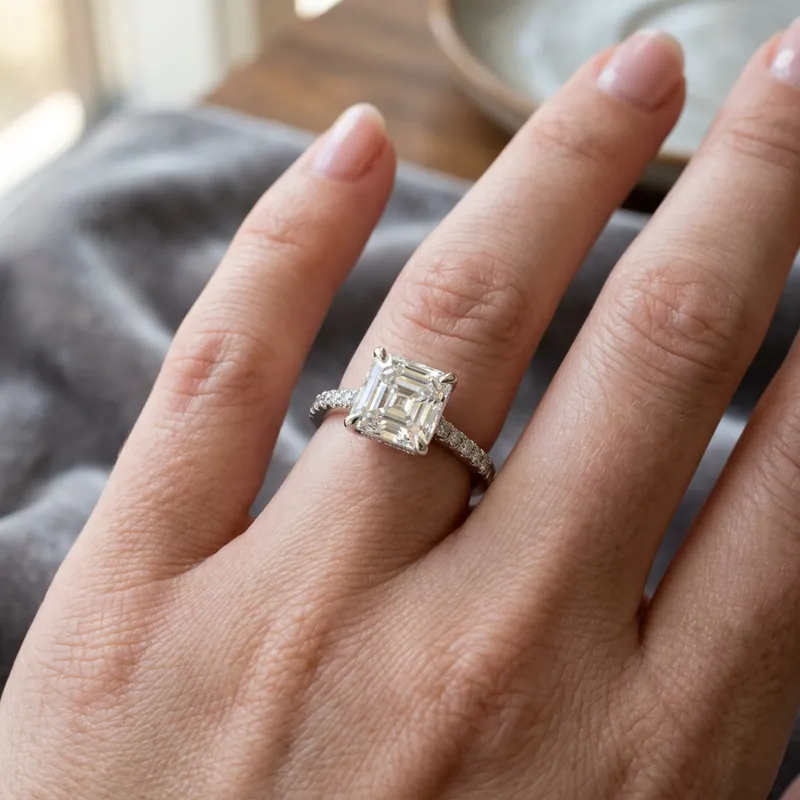
Cut quality refers to how well a diamond’s facets interact with light. A well-cut stone returns more brilliance and sparkle, while a poorly cut one looks dull even if it has high color and clarity grades. The cut grade is often considered the most important of the four Cs because it directly affects the stone’s beauty. Laboratories grade cut from Excellent to Poor, and the difference between a Good and an Excellent cut can change the price by a noticeable margin. For the best natural diamond value, prioritizing cut quality over carat weight or color is a common strategy.
Color Grade
Color grade measures the absence of color in a white diamond. The scale runs from D (colorless) to Z (light yellow or brown). Stones in the D, F range are rare and command a premium, but many people cannot tell the difference between a D and a G stone when set in a ring. Grades in the G, J range offer a good balance of appearance and cost. Once you go below K, the tint becomes more noticeable, especially in larger stones. This is where you can find a lower price, but the trade-off is a warmer look that some buyers prefer and others avoid.
Clarity
Clarity describes the presence of internal inclusions or surface blemishes. The scale ranges from Flawless (no inclusions or blemishes visible under 10x magnification) to Included (inclusions visible to the naked eye). Most diamonds have some inclusions, and the goal is to find one where they are not noticeable without magnification. Grades like VS1, VS2, SI1, and SI2 often provide a clean appearance at a lower cost than VVS or Flawless stones. An SI1 diamond with minor inclusions that are hard to see can be a smart choice for someone who wants a larger carat weight without a sky-high price.
Certification: The Proof Behind the Grade
A reliable grading report from an independent laboratory is essential. Without it, you are relying on the seller’s word alone, which may not be objective. Major labs like the Gemological Institute of America (GIA) and the American Gem Society (AGS) are trusted for their consistent standards. A certified diamond comes with a report that lists its exact four Cs, along with details like symmetry, fluorescence, and polish. This document gives you a factual basis for comparing stones and helps protect your purchase. When evaluating natural diamond value, a certified stone is always preferable to one without documentation, because the report removes guesswork and adds transparency to the price.
Beyond the Four Cs: Shape, Fluorescence, and Proportions
While the four Cs are the main drivers, other attributes also affect cost. The shape of the diamond, such as round, princess, or oval, influences how the stone is cut and how much rough material is lost during cutting. Round brilliant cuts are the most popular and generally cost more per carat than fancy shapes, partly because they waste more rough and require more labor. Fluorescence, a blue glow under ultraviolet light, can lower the price of a diamond if it is strong, though many stones with medium fluorescence appear perfectly fine in normal lighting. Proportions like table size and depth affect how light travels through the stone, and these measurements are included in a good grading report. A diamond with slightly off proportions might cost less but still look beautiful to most people, which can be a smart way to find a better price.
Lab-Grown Diamonds and the Market Context
In recent years, lab-grown diamonds have entered the market as an alternative to mined stones. They have the same physical and chemical properties as natural diamonds, but they are created in a laboratory rather than formed in the earth over millions of years. Lab-grown diamonds typically cost less than natural ones of comparable quality, which has shifted some buyer expectations. However, the two markets serve different preferences. Some buyers value the rarity and natural origin of a mined stone, while others prioritize the lower cost of a lab-grown option. The choice is personal, but understanding the difference helps when you compare prices and decide what matters to you. For those focused on a natural stone, the factors that drive its value remain the same regardless of the broader market.
Practical Tips for Shoppers
When you begin looking at diamonds, start by deciding your budget and then prioritize the four Cs in a way that matches your visual preferences. If sparkle is most important, put cut quality first. If size matters more, you might accept a slightly lower color or clarity grade to stay within your budget. Always ask for the grading report and review it carefully. Compare multiple stones side by side if possible, because two diamonds with the same grades can look different in person. Pay attention to how the stone performs in different lighting conditions. A diamond that looks bright in a store’s spotlights may appear dull in everyday light if its cut is poor.
Another practical step is to consider the ring setting. A well-chosen setting can make a diamond appear larger or enhance its color. For example, a yellow gold band can complement a stone with a slightly warmer color grade, while a white metal setting can make a lower-color stone look whiter. The setting itself has its own cost, and balancing that with the diamond’s price is part of the overall buying decision. Don’t overlook the importance of asking about return policies and warranties, especially if you are buying online. A reputable seller will provide clear information and stand behind their products.
Why Certification Matters for Your Purchase
Without a grading report, you have no independent verification of what you are buying. A diamond could be overgraded by a seller who wants to justify a high price, or its flaws could be understated. A certificate from a recognized lab gives you a neutral assessment that you can use to shop across different sellers. It also helps when you eventually want to insure the ring or resell the diamond. Always check that the report number matches the inscription on the diamond’s girdle, which is a tiny laser-engraved code visible under magnification. This step ensures that the stone in the setting is the same one described on the certificate.
In summary, understanding what drives a diamond’s price helps you make a confident choice. The interplay of carat weight, cut quality, color grade, clarity, and certification forms the backbone of natural diamond value. By learning to read a grading report and knowing which factors to prioritize, you can find a stone that fits both your taste and your budget. The process does not have to be overwhelming. With a little knowledge and careful comparison, you can select a diamond that will be treasured for years to come.